
_1794798050_WNo_1600d900.webp)
Portable dental units provide flexible treatment solutions for dental clinics, temporary treatment areas, and professional dental service providers. With integrated components such as air compressors, suction systems, water supply, and handpiece connections, these units can support different dental working environments while reducing dependence on fixed equipment installations.
Understanding the different types of portable dental units helps dental professionals, distributors, and wholesale buyers compare equipment configurations and identify suitable products. This guide covers portable dental unit types, applications, key specifications, and purchasing considerations in Egypt, with a closer look at the UMGROUP UM-P211 portable dental unit.
Portable dental units provide a flexible alternative to conventional fixed dental treatment installations. Depending on their design, they can integrate air supply, handpiece connections, water delivery, suction, instrument control, and other basic treatment functions into a compact system.
For Egyptian dental professionals and equipment distributors, these units can serve different working environments. A clinic may need a movable treatment system to support an additional treatment room, while a medical equipment distributor may be looking for products that meet the requirements of customers with different space and equipment needs.
However, the term portable dental unit covers several product structures. Some models are designed as small desktop machines, others use suitcase-style enclosures, and some are built into movable cabinets. Their mobility, working capacity, and installation requirements can differ considerably.
Before selecting a model, buyers should identify whether the equipment will be used for regular indoor treatment, temporary treatment arrangements, mobile dental services, or distribution. This helps narrow down the required configuration and avoid purchasing a unit that does not match the intended working environment.
Portable dental units are available in several configurations. Their differences mainly involve the enclosure, compressor arrangement, storage capacity, mobility, and included accessories. Understanding these structures helps buyers compare products based on their intended applications.
Desktop portable dental units are compact machines designed to be placed on a suitable work surface. They generally occupy less floor space than cabinet-style equipment and may be convenient for temporary treatment arrangements or selected professional applications.
Their actual capabilities depend on the model. Buyers should confirm whether the unit includes an air compressor, water supply, suction, handpiece tubing, and other necessary components.
Typical applications: Small treatment spaces, temporary dental setups, and selected professional procedures.
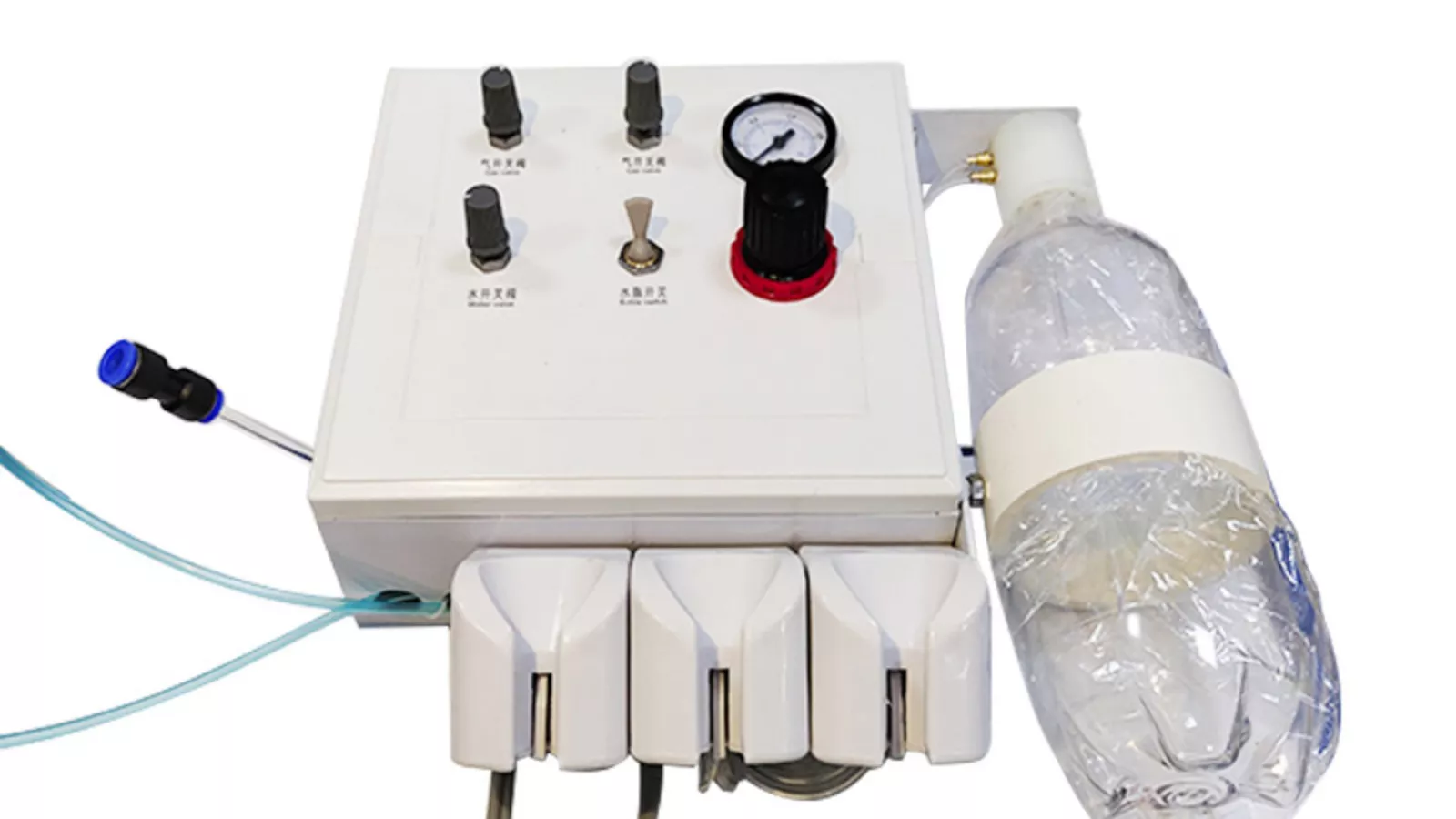
Suitcase-style portable dental units use a compact case structure that can be transported between locations. Some models integrate an air compressor, water bottle, waste bottle, handpiece connections, and foot control inside the enclosure.
This design is generally more suitable for buyers who prioritize compact storage and transportation. However, the internal space and available accessories may be more limited than those of larger mobile cabinet systems.
Typical applications: Mobile dental services, temporary treatment areas, and situations where equipment needs to be transported regularly.
Cabinet-style portable dental units combine treatment components with storage space and an instrument tray. Many models use universal wheels to make repositioning easier within a suitable indoor environment.
Compared with suitcase-style models, cabinet units usually provide more storage and a larger working platform. They may be a practical option for clinics that need an organized treatment station without installing a complete fixed dental chair system.
The UMGROUP UM-P211 Portable Dental Unit belongs to this category. It features a movable cabinet, six storage drawers, a removable instrument tray, and an integrated compressor system.
Typical applications: Dental clinics, indoor treatment rooms, and professional settings that require a movable equipment station with storage.
Mobile dental treatment carts are designed around a movable trolley or workstation structure. Depending on the model, they may accommodate dental instruments, handpiece connections, air supply components, and storage accessories.
Not every mobile cart includes a complete treatment system. Some products are designed mainly for instrument storage or equipment organization, so buyers should distinguish between a treatment unit and a general dental cart.
Typical applications: Dental clinics, treatment room organization, and equipment arrangements requiring flexible positioning.
| Unit Type | Main Characteristics | Typical Buyer Requirements |
|---|---|---|
| Desktop Portable Unit | Compact structure and limited space requirements | Small treatment setups and selected procedures |
| Suitcase-Style Unit | Case enclosure and convenient transportation | Mobile services and temporary locations |
| Cabinet-Style Unit | Storage drawers, instrument tray, and movable cabinet | Indoor clinics and organized treatment stations |
| Mobile Dental Cart | Movable workstation with model-dependent equipment | Flexible equipment arrangement and storage |
The suitable application of a portable dental unit depends on its structure, equipment configuration, and operating requirements. The following are common scenarios for buyers evaluating portable dental equipment in Egypt.
Dental clinics may use movable treatment units when they need additional equipment for a treatment room or want to reorganize their working space. Cabinet-style units with storage drawers and an instrument tray can help keep frequently used items organized.
Some facilities may need a temporary treatment station during renovation, expansion, or changes to their clinical layout. A suitable movable unit can provide selected treatment functions without requiring a permanent installation in every working area.
Mobile dental services may require equipment that can be transported to different locations. Suitcase-style units are often considered for this purpose because of their compact enclosure. Buyers should still evaluate the total equipment weight, available power supply, transportation conditions, and the need for additional equipment such as a dental chair and lighting.
Dental schools and training institutions may use portable treatment equipment for demonstrations, practical exercises, and selected teaching arrangements. The required configuration should be matched to the training program and the instruments being used.
Distributors in Egypt may consider several portable dental unit types to serve clinics with different budgets and working environments. Comparing desktop, suitcase-style, and cabinet-style products can help distributors build a more suitable product range.
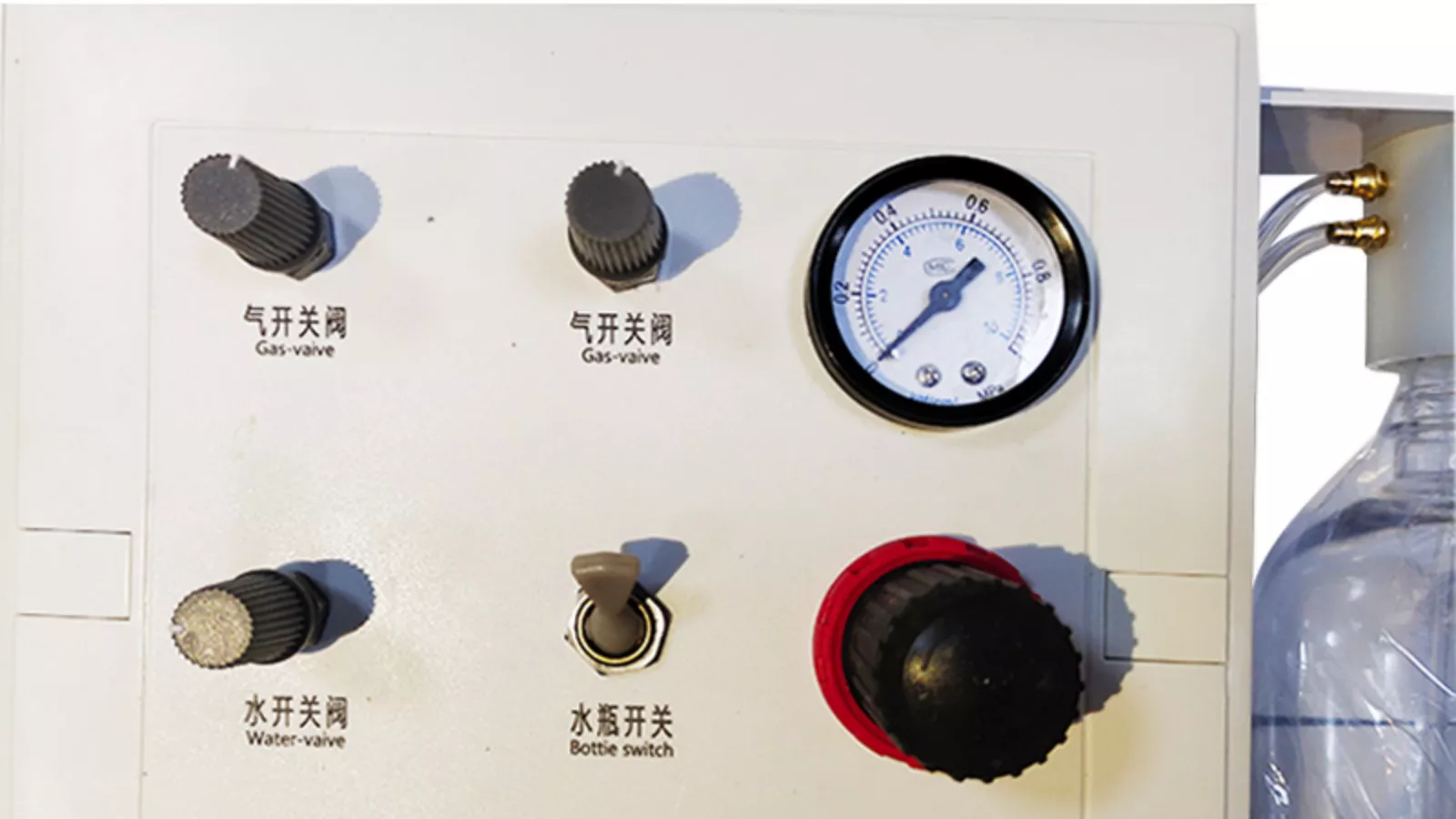
For buyers looking for a cabinet-style portable dental unit, the UMGROUP UM-P211 offers an integrated treatment and storage arrangement. Its design combines a movable cabinet, instrument tray, air compressor, suction device, and water-related components in one equipment system.
The UM-P211 is intended for indoor dental treatment. Its cabinet structure provides a working platform and storage space while allowing the unit to be repositioned on its wheels. This makes it different from small suitcase-style units intended primarily for frequent transportation.
The UM-P211 includes six storage drawers and a removable instrument tray. The drawers provide space for organizing instruments and related supplies, while the removable tray can be taken out for convenient cleaning or replacement according to the product design.
The unit is equipped with a silent compressor and a saliva suction device. Its basic configuration also includes high- and low-speed handpiece tubing, a three-way syringe, a water purification bottle system, a sewage bottle system, and a foot switch.
The movable cabinet structure allows the equipment to be repositioned within a suitable indoor workspace. This can be useful for clinics that want a flexible treatment station while maintaining organized storage and access to the required components.
High- and low-speed dental handpieces, as well as fiber-optic handpieces, are listed as optional accessories. Buyers should confirm the required handpiece configuration when requesting a quotation.
For complete product information, visit the UMGROUP UM-P211 Portable Dental Unit product page.
A cabinet-style dental treatment machine designed for indoor use, combining a movable cabinet, storage drawers, removable instrument tray, compressor, and basic treatment components.
Before purchasing a portable dental unit, buyers should compare the product's electrical requirements, compressor performance, working pressure, noise level, dimensions, and weight. These details help determine whether the equipment is suitable for the intended treatment environment.
| Specification | UM-P211 Parameter |
|---|---|
| Product Name | Cabinet Dental Treatment Machine |
| Voltage Frequency | 110V–240V, 50/60Hz |
| Power | 600W |
| Displacement | 118L/min |
| Working Pressure | 0–0.6MPa |
| Noise | 42dB |
| Net Weight | 66kg |
| Gross Weight | 76kg |
| Product Size | 67 × 57 × 85cm |
| Component | Quantity or Configuration |
|---|---|
| Movable Cabinet | 1 |
| Storage Drawers | 6 |
| Instrument Tray | Removable design |
| Silent Compressor | 1 |
| Saliva Suction Device | 1 |
| High-Speed Handpiece Tube | 1 set |
| Low-Speed Handpiece Tube | 1 set |
| Three-Way Syringe | 1 |
| Water Purification Bottle System | 1 set |
| Sewage Bottle System | 1 set |
| Foot Switch | 1 |
Important: The product's basic configuration and optional accessories should be confirmed in the quotation and order documentation. Dental handpieces are listed as optional rather than standard accessories on the product page.
Selecting a portable dental unit requires more than comparing the purchase price. Egyptian clinics, distributors, and procurement teams should evaluate the working environment, required functions, equipment compatibility, and import-related documentation before placing an order.
First, determine whether the unit will be used in a permanent dental clinic, a temporary treatment room, a mobile service, or a training facility.
If frequent transportation is required, a suitcase-style unit may be more practical. If storage capacity and a larger working platform are more important, a cabinet-style model may be worth considering.
Electrical compatibility is an important purchasing consideration. Confirm the equipment's voltage and frequency requirements and compare them with the power supply available at the intended installation location.
The UM-P211 product page lists a voltage range of 110V–240V and a frequency of 50/60Hz. Buyers should still confirm the exact electrical configuration supplied for their order.
The air compressor is an important component of a portable dental treatment system. Buyers should check the rated airflow, working pressure, power consumption, and noise level.
For the UM-P211, the listed displacement is 118L/min, working pressure is 0–0.6MPa, and noise level is 42dB. These values should be compared with the requirements of the intended handpieces and other connected equipment.
Different portable dental units use different water supply and suction arrangements. Before ordering, confirm whether the required saliva suction device, clean-water container, wastewater collection system, and related tubing are included.
Buyers should also ask about cleaning procedures, bottle capacity, connection details, and replacement parts.
Handpiece connections and operating requirements can differ between equipment models. Confirm the required high-speed and low-speed handpiece specifications, connection types, and whether handpieces are included or supplied separately.
If fiber-optic handpieces are required, confirm their availability and compatibility with the selected unit before placing an order.
Portability does not always mean that a dental unit is lightweight enough to be carried by one person. A cabinet-style model may be movable within a clinic but less suitable for frequent transportation between distant locations.
The UM-P211 has a listed net weight of 66kg and a product size of 67 × 57 × 85cm. Buyers should consider these dimensions when planning transportation, delivery, room access, and storage.
Ask the supplier for the product catalogue, technical specifications, operating instructions, warranty terms, and information about available spare parts. For Egyptian importers, the documentation should also be reviewed against the applicable medical-device import requirements.
For distributors and commercial buyers importing portable dental equipment into Egypt, product selection and import preparation should be handled together. Medical equipment may be subject to import approval, documentation, and other requirements administered by the relevant Egyptian authorities.
The Egyptian Drug Authority (EDA) publishes regulatory guidance covering import approvals for medical equipment and accessories. Its guidance includes documentation requirements for import applicants, equipment specifications, and supporting product information.
Before confirming an order, Egyptian importers should consult their customs broker or regulatory representative about the documents required for the specific product and import arrangement.
The EDA's published guidance for medical equipment import approvals includes a specific requirement concerning dental units: evidence that an anti-retraction valve is installed. The guidance identifies possible supporting evidence such as a factory catalogue, a manufacturer's letter, or the manufacturer's official website.
Importers should therefore confirm the applicable anti-retraction valve documentation for the exact model they intend to import. Do not assume that a general product description or a document for another model will satisfy the requirement.
Regulatory procedures and documentation requirements may change. Egyptian importers should verify the latest requirements directly with the EDA or an authorized local regulatory professional before shipment. They should also confirm that the product model, manufacturer information, accessories, and commercial invoice are consistent across the submitted documents.
For official information, refer to the Egyptian Drug Authority.
The price of a portable dental unit in Egypt depends on its structure, technical configuration, accessories, order quantity, shipping arrangement, and applicable import costs. A low-cost desktop unit and a cabinet-style treatment system should not be compared solely by their advertised prices because their functions and configurations may differ considerably.
Desktop, suitcase-style, and cabinet-style units have different designs and component arrangements. Larger systems with integrated storage, instrument trays, and additional treatment components may have different manufacturing and transportation costs.
Compressor power, airflow, working pressure, and noise level can influence the product configuration. Buyers should compare these parameters alongside the actual treatment requirements rather than choosing a model based on one specification alone.
The handpieces, suction device, three-way syringe, water system, foot control, and other accessories can affect the total quotation. Confirm which components are included in the basic configuration and which are optional.
Wholesale quantities, packaging requirements, branding requests, and product configuration may affect the final unit price. Distributors should provide their expected quantity and any customization requirements when requesting a quotation.
International transportation, insurance, customs clearance, and applicable taxes or duties can affect the final landed cost in Egypt. Buyers should request a clear quotation and calculate the total cost before setting their resale prices.
| Price Factor | What Buyers Should Confirm |
|---|---|
| Unit Type | Desktop, suitcase-style, or cabinet-style structure |
| Technical Configuration | Power, airflow, pressure, and noise level |
| Accessories | Handpieces, suction, syringe, bottles, and foot switch |
| Order Quantity | Sample quantity, wholesale quantity, or project volume |
| Customization | Packaging, branding, or configuration requirements |
| Logistics | Shipping method, destination, insurance, and import costs |
For Egyptian dental equipment distributors, wholesalers, and institutional procurement teams, choosing a supplier involves evaluating product consistency, technical communication, documentation, and long-term supply arrangements.
Ask suppliers to provide a detailed accessory list and technical specification sheet for each model. This helps avoid misunderstandings about whether handpieces, suction components, and other accessories are included in the quoted price.
A supplier with several portable dental unit structures may help distributors serve different customer requirements. Compare the available models and identify which are suitable for indoor clinics, temporary treatment rooms, or mobile services.
Before confirming a commercial order, request the product catalogue, operating instructions, technical specifications, and applicable quality documents. Egyptian importers should review these materials with their regulatory representative before shipment.
Portable dental units contain components that may require replacement or maintenance over time. Ask about the availability of tubing, bottles, valves, foot switches, suction components, and other model-specific spare parts.
Confirm the product dimensions, gross weight, packing method, shipping terms, and estimated delivery schedule. For cabinet-style equipment such as the UM-P211, packaging and handling arrangements should account for its size and weight.
A portable dental unit is a dental treatment system designed to provide selected dental equipment functions in a movable or compact structure. Depending on the model, it may include an air compressor, handpiece connections, water supply, suction, a three-way syringe, and foot control.
The suitable model depends on the clinic's available space, treatment requirements, and preferred equipment arrangement. A desktop unit may suit a compact setup, while a cabinet-style unit with storage drawers and an instrument tray may be more appropriate for an indoor treatment station.
The UM-P211 is a cabinet-style unit designed for indoor dental treatment. It has a movable cabinet, but its listed net weight is 66kg. Buyers who need to transport equipment frequently between distant locations should compare its size and weight with smaller suitcase-style models before choosing it.
Its listed basic configuration includes a movable cabinet, six storage drawers, a removable instrument tray, silent compressor, saliva suction device, high- and low-speed handpiece tubing, three-way syringe, water purification bottle system, sewage bottle system, and foot switch. Dental handpieces are listed as optional accessories.
The product page lists a voltage range of 110V–240V and 50/60Hz. Buyers should confirm the exact electrical configuration supplied for their order and check compatibility with the installation location.
The listed displacement is 118L/min, and the working pressure is 0–0.6MPa. Buyers should compare these parameters with the requirements of their intended handpieces and connected equipment.
The price varies according to the unit type, compressor configuration, included accessories, order quantity, shipping method, and import-related costs. Request a model-specific quotation to compare the complete equipment configuration rather than the base price alone.
Importers should confirm the applicable EDA import approval and documentation requirements, including product catalogues, technical specifications, and relevant quality documents. The EDA's published guidance also identifies evidence of an anti-retraction valve for dental units as a specific documentation consideration. Always verify current requirements before shipment.
Distributors can contact suppliers to discuss available models, order quantities, packaging, product documentation, and shipping arrangements. The final quotation should specify the model and included accessories.
Provide your preferred model, intended application, required accessories, order quantity, destination city in Egypt, and any documentation requirements. This information helps the supplier evaluate the appropriate product configuration.
Choosing a suitable portable dental unit in Egypt requires evaluating the unit structure, compressor performance, suction and water systems, handpiece compatibility, electrical requirements, and intended working environment. Desktop, suitcase-style, and cabinet-style units serve different needs, so buyers should compare complete configurations before making a purchasing decision.
For dental clinics and buyers seeking a cabinet-style indoor treatment system, the UMGROUP UM-P211 offers a movable cabinet, six storage drawers, a removable instrument tray, a built-in silent compressor, and integrated treatment components. Its specifications and accessory configuration should be checked against the clinic's requirements before ordering.
For Egyptian distributors and importers, confirming product documentation and applicable EDA requirements before shipment is also an important part of the procurement process.
UMGROUP provides portable dental units in different configurations for professional dental equipment buyers. If you are considering the UM-P211 or comparing other portable dental treatment systems, share your required specifications, accessory preferences, and estimated order quantity with our team.
For a faster product discussion, include your destination in Egypt, preferred model, required accessories, and import documentation requirements.