
In modern dental education, a dental simulator should no longer be understood as a standalone practice device or a simple phantom head. Instead, it represents a system-level training infrastructure designed to support structured skill development, standardized assessment, and safe clinical preparation.
At its core, a dental simulator recreates the clinical working environment in which dental procedures are performed. This includes not only anatomical simulation, but also operator posture, instrument positioning, workflow coordination, and procedural sequencing. The goal is not merely repetition, but progressive competency building.
A complete dental simulation system typically integrates the following elements:
Anatomically accurate phantom heads that replicate oral structures and patient positioning
Adjustable mechanical or pneumatic positioning systems to simulate real clinical ergonomics
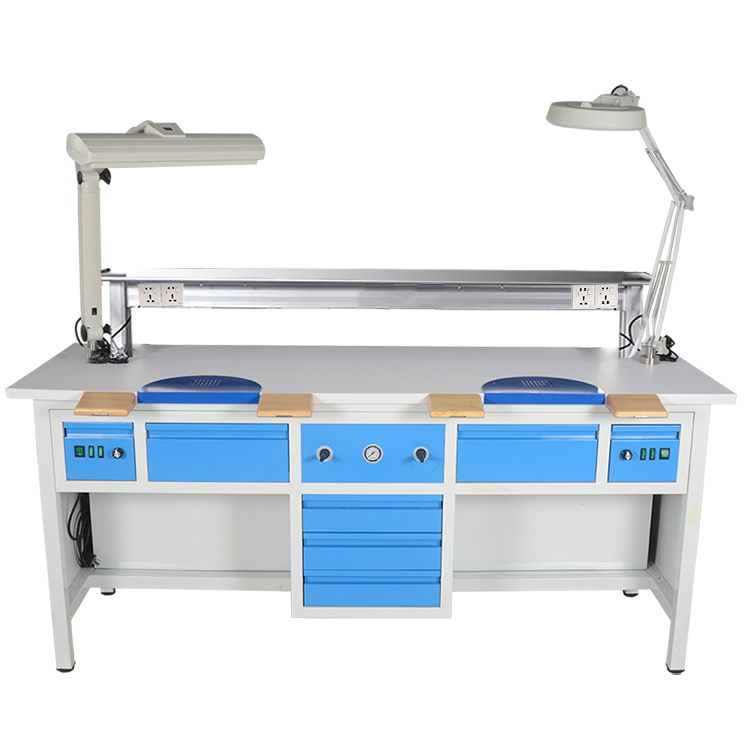
Workstations compatible with standard dental instruments, tubing, and accessories
Modular configurations that allow institutions to scale training capacity and adapt to curriculum changes
From an educational standpoint, dental simulators enable institutions to control variables that are difficult to standardize in early clinical exposure—such as case complexity, working angles, and operator ergonomics. From an operational standpoint, they provide repeatability, safety, and efficiency.
This system-level approach is particularly important for dental schools and training centers facing increasing enrollment, limited clinical resources, and higher expectations for graduate competency. By shifting a significant portion of early skill acquisition into a simulated environment, institutions can ensure that students enter clinical settings with a higher baseline of technical readiness.
Traditional dental practice equipment—such as basic mannequin heads or bench-mounted training tools—primarily focuses on isolated technical actions, like drilling or instrument handling. While these tools remain useful, they lack the capacity to replicate clinical context.
A modern dental simulator, by contrast, emphasizes:
Whole-procedure simulation rather than isolated actions
Operator ergonomics and posture control, which directly affect long-term clinical performance
Consistency across training cohorts, reducing instructor-dependent variability
Objective evaluation potential, especially when combined with standardized training protocols
This distinction explains why dental simulators have moved from optional teaching aids to core infrastructure in pre-clinical dental education worldwide.
From a manufacturing standpoint, developing a dental simulator is fundamentally different from producing a single dental instrument or accessory. A simulator must function as a durable, repeat-use system, capable of withstanding daily training cycles over many years.
Key design considerations include:
Mechanical stability to ensure precision during fine motor training
Structural durability for high-frequency use in teaching environments
Component compatibility with a wide range of dental handpieces and accessories
Consistency across units, especially for institutions deploying large training labs
Manufacturers with long-term export experience typically design multiple simulator configurations—adjustable, pneumatic, compact, or integrated—to meet diverse educational needs across different regions and teaching models. This adaptability is a defining characteristic of reliable dental simulation systems.
The role of dental simulators in education has evolved significantly over the past decades, reflecting broader changes in dental training standards, patient safety expectations, and institutional accountability.
In the early stages of dental education, simulation focused almost exclusively on manual dexterity. Simple phantom heads and bench-mounted models allowed students to practice drilling techniques and basic restorative procedures.
These systems offered limited adjustability and primarily served as an introduction to handpiece control. Ergonomics, workflow simulation, and standardized assessment were not yet central concerns.
As dental education standards evolved, institutions began to recognize the importance of operator posture, patient positioning, and procedural workflow. Simulation systems became more adjustable, allowing instructors to introduce realistic clinical scenarios.
During this stage, dental simulators started to resemble real operatory environments more closely, incorporating:
Adjustable head positioning
Integrated workstations
Standard dental unit layouts
This shift marked the beginning of dental simulation as a structured teaching environment, rather than a simple practice station.
Today, dental simulators play a central role in pre-clinical training systems. They are no longer limited to skill rehearsal, but are used to support:
Curriculum-standardized training modules
Competency-based assessment frameworks
Safer transitions to live patient care
Modern dental simulation systems are often deployed at scale, forming complete pre-clinical laboratories where dozens or even hundreds of students train under standardized conditions.
For institutions, this evolution reflects a strategic shift: reducing dependency on early patient exposure while improving consistency and quality of skill development. For manufacturers, it requires a deeper understanding of educational workflows, infrastructure constraints, and long-term durability requirements.
The global adoption of dental simulators is driven by several converging factors:
Growing dental student populations in both developed and emerging markets
Stricter patient safety regulations limiting early clinical exposure
Rising expectations for graduate competency and standardization
Infrastructure scalability needs for modern dental schools
As a result, dental simulators are increasingly viewed not as optional investments, but as foundational assets in modern dental education systems.
When discussing dental simulators, many articles focus only on surface-level technology differences. In practice, the more meaningful distinction lies in how each simulator type supports specific training stages, teaching capacity, and long-term scalability.
From a system design perspective, dental simulators can be broadly categorized into four main types.
Phantom head–based systems form the foundation of dental simulation worldwide. Their continued dominance is not accidental; these systems closely replicate the physical conditions under which most clinical dental procedures are performed.
At a structural level, a phantom head simulator consists of:
An anatomically proportioned head model
Replaceable jaws and teeth models
A mounting mechanism that allows multi-axis positioning
The primary educational value of phantom head systems lies in their ability to train:
Handpiece control and tactile precision
Operator posture and ergonomics
Access angles and visual coordination
Unlike purely digital solutions, phantom head simulators provide true physical resistance and spatial realism, which are critical for developing muscle memory during pre-clinical training.
From a manufacturing standpoint, high-quality phantom head systems require:
Precise mechanical tolerances to maintain stability during fine movements
Durable materials capable of withstanding intensive daily use
Standardized interfaces compatible with a wide range of dental instruments
Export-oriented manufacturers often offer multiple phantom head configurations—such as adjustable, pneumatic, or compact variants—to meet the different infrastructure and budget requirements of dental schools across regions.
Integrated dental simulation units represent the next step beyond standalone phantom heads. These systems are designed to simulate a complete operatory-style environment, combining the phantom head, workstation, and instrument layout into a unified training platform.
Key characteristics include:
Coordinated movement between head position and working surface
Fixed or semi-fixed layouts that mirror clinical dental units
Built-in support for dental handpieces, suction, and accessories
Educationally, integrated units allow students to experience procedural workflows more realistically. This includes transitioning between instruments, managing working posture over longer procedures, and understanding spatial constraints similar to real clinical settings.
From a system-planning perspective, integrated units are often selected by institutions aiming to:
Reduce the gap between pre-clinical and clinical training
Standardize training conditions across large student cohorts
Build long-term, stable teaching infrastructure
Manufacturing such systems requires coordination across mechanical design, structural stability, and modular adaptability—especially when units are deployed in large training labs.
Compact and modular dental simulators are designed for flexibility and space efficiency. They are commonly used in institutions with limited training space or as supplementary systems within larger simulation labs.
These systems typically feature:
Simplified structural designs
Essential positioning and mounting functions
Modular components that can be reconfigured or relocated
While compact systems may not replicate full operatory environments, they serve important educational roles, such as:
Introductory skills training
Targeted procedural practice
Overflow or auxiliary training capacity
From a strategic standpoint, modular simulators allow institutions to scale training capacity incrementally, adding or relocating units as enrollment grows or teaching needs change.
In practice, many advanced dental schools do not rely on a single type of simulator. Instead, they deploy hybrid training environments that combine multiple simulator categories.
For example:
Phantom head systems for early manual skill development
Integrated simulation units for workflow and ergonomics training
Compact modules for focused or remedial practice
This layered approach allows institutions to align each simulator type with specific learning objectives, maximizing both educational efficiency and infrastructure investment.
One of the most overlooked aspects of dental simulation is system planning at the institutional level. High-performing dental schools treat simulators not as isolated purchases, but as components of a cohesive training ecosystem.
A well-designed simulation infrastructure supports a progressive learning pathway:
Foundational Stage
Students begin with basic phantom head systems to develop hand–eye coordination and instrument familiarity.
Intermediate Stage
Integrated simulation units introduce realistic workflows, posture control, and procedural sequencing.
Advanced and Assessment Stage
Selected simulators are used for competency evaluations, standardized exams, or targeted skill refinement.
This progression ensures that simulation resources are aligned with curriculum milestones rather than used uniformly at all stages.
Institutions must also consider capacity and space utilization. Large pre-clinical labs may require dozens of simulators operating simultaneously, while smaller training centers may prioritize flexible layouts.
Manufacturers experienced in supplying dental simulation systems internationally often support institutions by:
Offering multiple simulator sizes and configurations
Designing units that fit standard lab layouts
Ensuring consistency across batches for uniform teaching conditions
This system-level thinking is essential for long-term operational success.
Unlike short-term training tools, dental simulators are expected to operate reliably over many years. Institutions increasingly evaluate simulators based on:
Structural durability under intensive use
Ease of maintenance and component replacement
Availability of standardized parts and accessories
From a manufacturing perspective, this places emphasis on robust structural design, standardized components, and long-term support capability, particularly for export markets where on-site service access may be limited.
As dental education becomes more competitive and regulated, simulation infrastructure is also viewed as a strategic asset. Well-planned simulator systems help institutions:
Improve teaching consistency
Enhance student outcomes
Meet accreditation and evaluation standards
This explains why many institutions now invest in dental simulators as part of multi-year development plans rather than one-time equipment purchases.
Dental simulators demonstrate their greatest value when applied strategically across different stages of dental education. Rather than serving a single function, they support multiple teaching objectives throughout the entire training cycle.
In the early stages of dental education, students must develop manual dexterity, spatial awareness, and instrument familiarity before any clinical exposure. Dental simulators provide a controlled environment where these foundational skills can be practiced repeatedly without risk.
At this stage, simulators are commonly used to train:
Basic handpiece handling and drilling control
Access angle awareness and visibility management
Coordination between operator posture and working field
Because every student works under similar simulated conditions, instructors can establish consistent technical benchmarks, ensuring that all trainees meet minimum competency requirements before progressing.
As training advances, dental simulators are increasingly used to address ergonomic discipline and procedural workflow, areas that are difficult to teach through theory alone.
Simulation systems allow students to practice:
Correct operator posture over extended procedures
Instrument transitions and positioning efficiency
Coordination between visual focus, hand movement, and body alignment
Poor ergonomics developed early in training can lead to long-term clinical inefficiencies and physical strain. By incorporating simulator-based ergonomic training, institutions help students build habits aligned with real clinical practice.
Dental simulators are also used to support procedure-specific training modules within structured curricula. In these scenarios, simulators act as platforms for:
Step-by-step procedural rehearsal
Instructor-guided demonstrations
Standardized task repetition
Because simulators can be configured consistently across multiple units, they enable institutions to align teaching outcomes across different classes, instructors, or even campuses.
One of the most significant advantages of dental simulators is their role in objective skill assessment. Traditional evaluations often rely heavily on instructor judgment, which can vary between evaluators.
Simulation-based assessment offers:
Standardized test conditions
Repeatable evaluation scenarios
Clear performance benchmarks
As dental education moves toward competency-based models, simulators increasingly support formal assessments, internal examinations, and accreditation-related evaluations.
Beyond academic institutions, dental simulators are also used for:
Continuing dental education (CDE) programs
Professional skill refreshment
Product and workflow training by dental equipment companies
In these contexts, simulators provide a safe, efficient way to demonstrate techniques and technologies without disrupting clinical operations.
Traditional dental training methods have formed the backbone of education for decades and remain an important component of instruction. However, they face growing limitations in modern educational environments.
Conventional training often relies on a combination of:
Classroom instruction
Basic mannequin-based practice
Early patient exposure under supervision
While effective in certain contexts, these methods present challenges:
Limited opportunities for repeated practice
Variability in clinical case availability
Increased patient safety concerns
Instructor-dependent assessment consistency
As student numbers grow and regulatory standards become stricter, these limitations become more pronounced.
Dental simulators address many of these challenges by offering:
Unlimited, repeatable practice without patient risk
Standardized training environments across student cohorts
Improved preparation before clinical exposure
Greater instructional efficiency in large training programs
By allowing students to refine skills in simulated environments, institutions can reduce reliance on early patient exposure and ensure higher baseline competency.
| Aspect | Dental Simulators | Traditional Training |
|---|---|---|
| Practice frequency | Unlimited | Limited |
| Patient safety | No patient involvement | Patient risk present |
| Training consistency | High | Variable |
| Skill assessment | Objective and repeatable | Largely subjective |
| Scalability | Suitable for large cohorts | Resource constrained |
Rather than replacing traditional methods, dental simulators complement them by strengthening early and intermediate training stages.
Institutions that integrate dental simulators strategically often observe:
More consistent skill development across students
Smoother transitions into clinical environments
Reduced training-related risks
Improved teaching efficiency
These outcomes explain why simulation-based training is increasingly considered a core requirement rather than an optional enhancement.
Selecting a dental simulation system is not a short-term purchasing decision. For dental schools, training centers, and institutional buyers, it represents a long-term infrastructure investment that directly influences teaching quality, operational efficiency, and student outcomes.
A structured planning approach helps institutions avoid common pitfalls and align simulation resources with educational objectives.
The first step in selecting a dental simulator is to clearly define training goals. Different stages of dental education require different simulation capabilities.
Key questions include:
Which skills should be developed at the pre-clinical stage?
How much emphasis is placed on ergonomics and workflow simulation?
Are simulators used primarily for skill practice, assessment, or both?
Institutions that map simulators directly to curriculum milestones are more likely to achieve consistent training outcomes and efficient equipment utilization.
Simulation systems must support realistic teaching loads. Underestimating capacity requirements can lead to overcrowded labs, limited practice time, and inconsistent learning experiences.
Effective capacity planning considers:
Total student enrollment per cohort
Available training hours per day
Group-based vs individual practice models
Scalable simulator systems—offered in multiple configurations and layouts—allow institutions to expand capacity over time without redesigning entire facilities.
Physical infrastructure plays a major role in simulator selection. Factors such as room layout, power supply, and ventilation influence which simulator types are suitable.
Institutions must evaluate:
Floor space and ceiling height
Fixed vs flexible lab layouts
Compatibility with existing dental instruments
Manufacturers with experience supplying simulation systems to diverse global markets often design units that adapt to different infrastructure conditions, reducing installation complexity.
Unlike standard dental equipment, simulation units are subjected to high-frequency daily use. Durability and ease of maintenance are therefore critical.
Long-term value depends on:
Structural robustness of mechanical components
Availability of standardized replacement parts
Ease of routine maintenance and servicing
Institutions increasingly assess simulators based on total cost of ownership, rather than initial purchase price alone.
Some of the most common issues in simulator procurement include:
Choosing systems based solely on advanced features rather than usability
Underestimating long-term maintenance requirements
Failing to consider future expansion or curriculum changes
A well-planned simulation system should remain relevant and effective over many years of educational use.
From a manufacturing standpoint, a dental simulator is a complex system, not a single product. Its reliability depends on thoughtful design, precise production processes, and long-term consistency.
This perspective is rarely discussed in educational blogs, yet it plays a decisive role in real-world performance.
Mechanical stability is essential for accurate skill training. Even minor structural vibration or movement can affect precision and undermine learning outcomes.
Reliable dental simulators are characterized by:
Rigid support structures
Stable mounting systems
Smooth and controlled adjustment mechanisms
Manufacturers must balance stability with adjustability, ensuring that simulators remain secure under frequent repositioning.
Dental training environments often use a wide range of instruments and accessories. Simulation systems must therefore support standardized interfaces.
Key considerations include:
Compatibility with commonly used dental handpieces
Modular accessory mounting options
Consistent specifications across production batches
Standardization simplifies maintenance, training, and part replacement—especially for institutions operating multiple labs.
For large educational deployments, consistency across units is critical. Variations between simulators can lead to unequal training conditions and assessment challenges.
Export-oriented manufacturers implement:
Repeatable production processes
Strict quality control protocols
Batch-level consistency checks
These practices ensure that simulation systems perform uniformly across classrooms, campuses, and countries.
Dental simulators supplied to international markets must accommodate diverse teaching standards, regulatory environments, and infrastructure constraints.
This requires:
Flexible configurations for different educational models
Durable designs suited for varying usage intensity
Documentation and support compatible with international users
Manufacturers with global experience understand that reliability extends beyond the product itself to include long-term usability and adaptability.
Reliable dental simulators are not one-time deliveries. They are part of ongoing educational partnerships between institutions and manufacturers.
Long-term reliability depends on:
Availability of technical support
Access to spare parts
Continuity of product lines and compatibility
From this perspective, manufacturing capability and operational stability are as important as initial design features.
Dental simulation is entering a new phase of development, driven by evolving educational standards, digital integration, and global demand for consistent training outcomes. While physical simulation remains essential, emerging trends are reshaping how dental simulators are designed, deployed, and evaluated.
One of the most significant trends is the gradual integration of physical simulation systems with digital assessment tools. While traditional simulators focus on mechanical realism, future systems increasingly incorporate data-driven evaluation methods.
This integration enables:
Objective tracking of training progress
More structured performance feedback
Data-supported curriculum refinement
Rather than replacing physical simulators, digital elements enhance their educational value by adding measurable learning outcomes.
Modern dental education places growing emphasis on operator ergonomics and long-term practitioner health. Simulation systems are therefore evolving to better support posture analysis, working distance control, and procedural efficiency.
Design priorities increasingly include:
Wider ranges of adjustable positioning
Improved stability during extended procedures
Training scenarios that reinforce healthy working habits
These developments reflect a broader understanding that effective dental training must address both technical skill and practitioner sustainability.
As dental institutions expand and diversify, simulation infrastructure must remain adaptable. Modular simulator designs allow schools to:
Expand training capacity gradually
Reconfigure labs for different teaching models
Adapt to changing curriculum requirements
This trend favors manufacturers capable of delivering consistent product families rather than isolated models.
Globalization of dental education has increased the demand for standardized training environments. Simulation systems are increasingly used to align teaching quality across institutions, regions, and educational systems.
As a result, dental simulators are becoming reference tools for:
Pre-clinical competency benchmarks
Accreditation and evaluation frameworks
International training programs
This reinforces their role as foundational educational infrastructure rather than optional teaching aids.
Dental simulators have evolved far beyond their original role as basic training devices. Today, they represent strategic educational infrastructure that supports skill development, safety, consistency, and long-term institutional growth.
When implemented thoughtfully, dental simulation systems:
Improve the quality and consistency of pre-clinical training
Reduce reliance on early patient exposure
Support competency-based education models
Enhance operational efficiency in teaching environments
For dental schools, training centers, and institutional buyers, the true value of a dental simulator lies not in individual features, but in its ability to function reliably as part of a comprehensive training ecosystem.
Manufacturing quality, system design, scalability, and long-term support all play critical roles in determining whether a simulator remains effective over years of daily use. Institutions that approach simulator selection as a long-term investment—rather than a short-term equipment purchase—are better positioned to meet evolving educational standards and industry expectations.
As dental education continues to advance globally, dental simulators will remain essential tools for building competent, confident, and clinically prepared professionals.